

On April 1, the National Aeronautics and Space Administration (NASA) launched four astronauts on a ten-day trip around the moon. This mission marks the first time humans have entered deep space in over 50 years, solidifying its place in history.
Artemis II was a test flight that will bring NASA one step closer to landing on the moon. This flight is the second after Artemis I, an uncrewed flight that launched in 2022. After the success of the first mission, NASA decided to proceed with a crewed flight next. The Artemis II used the Space Launch System (SLS) and Orion spacecraft to fly around the Moon and back towards Earth. With this successful flight, it will verify the SLS’s ability to get to the Moon and the Orion spacecraft’s life support system’s ability to sustain life during the trip. Artemis II’s success would greenlight a third Artemis flight to actually land on the Moon.
“The first crewed Artemis flight marks a key step toward long‑term return to the Moon and future missions to Mars,” NASA’s official website said.
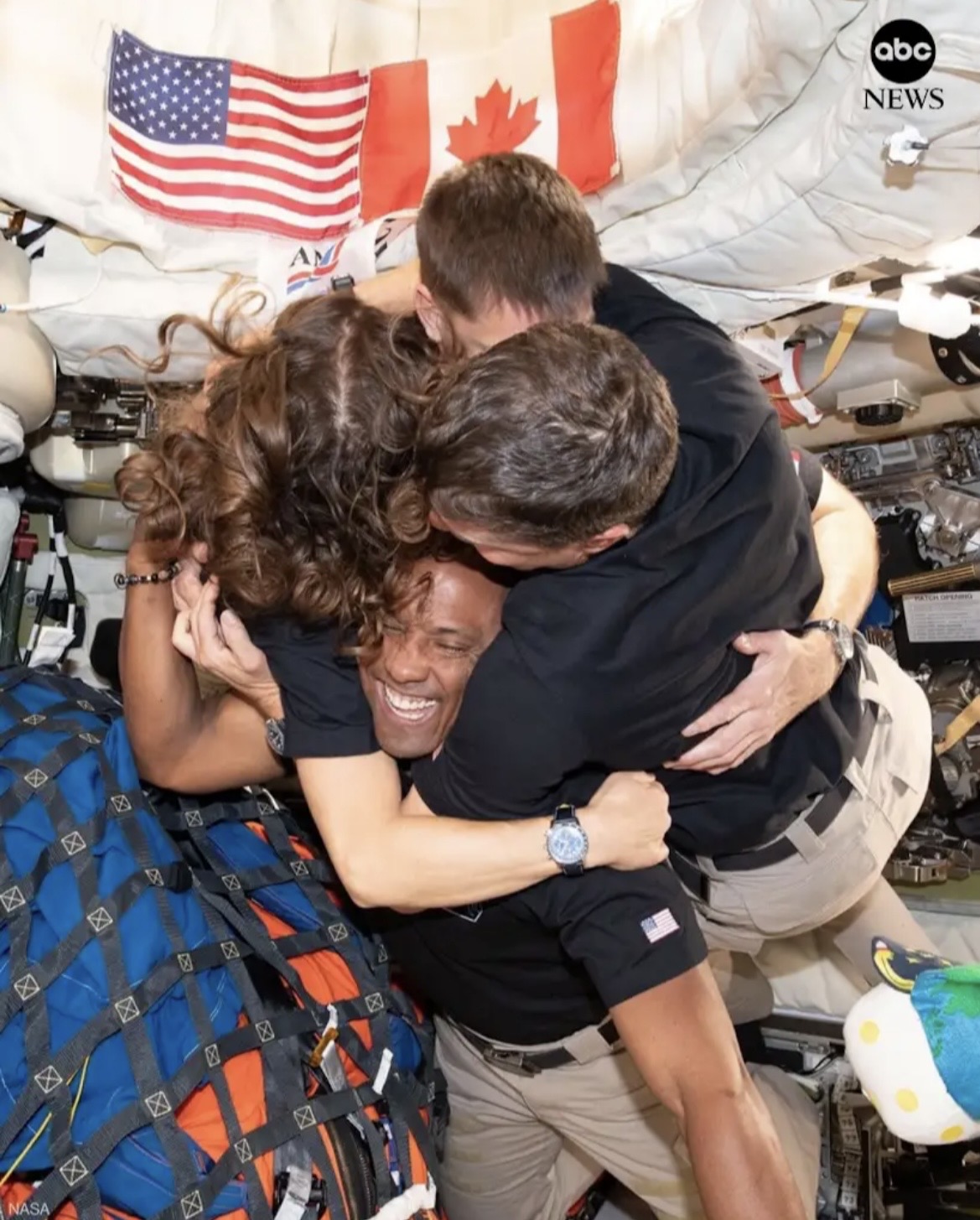
The Artemis II crew consists of four trained astronauts. The Commander of the mission is Reid Wiseman, a Navy veteran, pilot and engineer. He started astronaut training in 2009 and served as a Flight Engineer on the International Space Station before being assigned to the Artemis mission. The mission’s pilot is Victor Glover. He started training in 2013 while simultaneously serving as a Legislative Fellow in the U.S. Senate. Afterwards, he served as a pilot and flight engineer aboard the International Space Station before the Artemis mission. Lastly, there are two Mission Specialists, Christina Koch and Jeremy Hanson. Koch is an engineer who became an astronaut in 2013. She worked on the International Space Station for multiple expeditions, participated in the first all-female spacewalk and served in the Astronaut Office and NASA’s Johnson Space Center. Hanson will be the first Canadian astronaut to visit the Moon. He has worked at the Mission Control Center as capcom and in various astronaut training programs. Each of these astronauts is thoroughly trained to achieve Artemis II’s mission.
“For the first time since 1972, NASA is sending humans back on a path toward the Moon with the Artemis II mission. Launching aboard the Space Launch System (SLS) rocket, NASA astronauts Reid Wiseman, Victor Glover, and Christina Koch, as well as Jeremy Hansen from the Canadian Space Agency, will set off to orbit the Moon on a 10-day mission,” the Kennedy Space Center’s official website said. “Their goal is to verify modern human capabilities in deep space and pave the way for long-term exploration and science on the lunar surface.”
Artemis II test flight around the Moon broke the record for human spaceflight set by the Apollo 13 mission in 1970. According to NASA, the crew traveled about 252,756 miles before looping back toward Earth. This test flight has proved that NASA can send astronauts to the Moon. On April 10, Artemis II returned to Earth, splashing down in the Pacific ocean. Four healthy astronauts were retrieved from the Orion spacecraft, along with data they collected. The success of Artemis II has set the stage for a third mission in which a crew of astronauts will land on the Moon and establish a home base.
“At NASA, we dare to reach higher, explore farther, and achieve the impossible. That’s embodied perfectly by our Artemis II astronauts – Reid, Victor, Christina, and Jeremy. They are charting new frontiers for all humanity,” the Acting Associate Administrator for Exploration Systems Development Mission Directorate at NASA Headquarters in Washington said. “Their dedication is about more than breaking records. It’s fueling our hope for a bold future. Their mission is carrying our promise to return to the Moon’s surface, this time to stay as we establish a Moon Base.”